The Team
"Because of the multitude of teachers out there, I can be more picky about whom I teach. I will be teaching only those with great hearts - warrior hearts. And I hope that you all, when you return to your homelands, will teach only those with good hearts. That is my wish and that is why I do not make some giant organization."
- Masaaki Hatsumi

Shidôshi Joshua Noro Polier
士道師 ジョシュア 野呂 ポリア
Joshua Noro Polier is our main instructor. A native New Yorker, he has been an active student in the martial arts since he began training in Kodokan Judo at the age of four. Joshua has been training in The 9 Schools since 1991.
Joshua's experience of studying all over the world, under many instructors, has influenced and complimented his understanding of the Bujinkan art. His quest for the best instruction available has brought him all over North America, Europe and Asia.
Joshua's first trip to Japan for martial arts instruction was in 1992 for several months. Joshua received his Shidôshi Menkyo (teaching license) from Hatsumi Soke in 2000. In January of 2006, after 15 years of searching, Joshua finally found who he was looking for, his future teacher, Dr. Kacem Zoughari.
Assistant Instructor Matt Bunday
 Matt began his practice in 2013 and felt drawn to Josh's rigorous, challenging, and encouraging approach to teaching. Matt also felt welcomed by the sincere dōjō community, through which he has met several of his closest friends. Matt survived a childhood sexual assault and through his practice regrew a radical sense of safety and presence in the world.
Matt's practice has bolstered his professional career as a software engineer. He routinely feels that his work challenges feel simple in comparison to his time in the dōjō. Bringing the practice mentality of the dōjō into his work has made him effective across his roles as a startup founder, founding engineer, and big-tech senior employee. Matt currently works on blockchain security at Coinbase.
Shidôshi Ignacio Cubillan
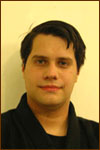 Ignacio started training in the Bujinkan in 1992, while in high school. Fortunately at this time, Sweden was one of the "capitals" of Bujinkan training in Europe. He has also trained in Venezuela and in the USA. He is trilingual, fluent in Swedish, Spanish and English. Ignacio moved to the US in 2000 and spent a fair amount of time investigating the various dōjō in NYC before finding a good match, in the Benevolent Heart Dōjō (BHD), for his continued training.
Assistant Instructor Cameron McNair
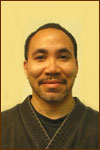 Cameron started his formal training in martial arts while attending Princeton University, studying for several years the Korean art of Tang Soo Do, Moo Duk Qwan, achieving the rank of black belt. Cameron joined the Bujinkan dōjō in 1999 training under Greg Kyle, David Greenberg and his current instructor, Joshua Polier. Cameron attends Bujinkan seminars and Tai Kai whenever possible. Outside of his interest in all things Japanese, Cameron is employed as a senior director of budgets. He enjoys spending time with his wife and daughter, and playing music in his free time.
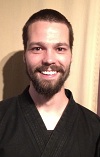 James, as a child in 1980 began training in Karate. Over the years
James has tried several arts, all the while looking for
something he still can't quite verbalize. From Taekwondo (ITF and WTF) to
Systema and a few arts in between he found useful things everywhere but James
didn't find the essence that he was looking for until he began
training with the BHD. James is happy to have found Josh, Ignacio, and
the other BHD members and he is
thankful to them as well as to their teachers for transmitting
the art so that it could reach him.
James, as a child in 1980 began training in Karate. Over the years
James has tried several arts, all the while looking for
something he still can't quite verbalize. From Taekwondo (ITF and WTF) to
Systema and a few arts in between he found useful things everywhere but James
didn't find the essence that he was looking for until he began
training with the BHD. James is happy to have found Josh, Ignacio, and
the other BHD members and he is
thankful to them as well as to their teachers for transmitting
the art so that it could reach him.
James is a musician and is employed in IT.
 Before finding the Benevolent Heart Dōjō, Nicole Brancato had no pervious martial arts experience. Nicole's brother, an officer of the United States Army and experienced martial arts practitioner, guided her towards the Benevolent Heart Dōjō. So she spent the summer of 2014 searching for a Bujinkan dōjō which emphasized quality of movement, precision and effectiveness. After the first class at the Benevolent Heart Dōjō, she immediately felt at home; the dōjō stood out among the others she had visited, and she knew she had found what she
looking for.
Before finding the Benevolent Heart Dōjō, Nicole Brancato had no pervious martial arts experience. Nicole's brother, an officer of the United States Army and experienced martial arts practitioner, guided her towards the Benevolent Heart Dōjō. So she spent the summer of 2014 searching for a Bujinkan dōjō which emphasized quality of movement, precision and effectiveness. After the first class at the Benevolent Heart Dōjō, she immediately felt at home; the dōjō stood out among the others she had visited, and she knew she had found what she
looking for.
Nicole is a professional pianist, and she is constantly drawing connections between her studies in music and martial arts.
 Donovan began his martial arts path in 1989 when his step-father started training in Aikido at Steven Segal's dōjō in West Hollywood. During this time he started collecting and reading a number of Masaaki Hatsumi Sensei's books, but it wasn't until Donovan moved to Arizona that he also started training in Aikido. A few years later Donovan moved to NYC and decided to follow his original desire to train in Ninjutsu related arts and in 2003 was fortunate to be able to start training under shidôshi Joshua Noro Polier. After a break, Donovan returned in early 2009 and has been at it ever since. Donovan has been to Japan twice and hopes to return again. He lives with his wife Kim and their three kids Anthony, Ryan and Olivia.
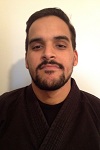 Ian's journey in the martial arts began early, with formal training in Tae Kwon Do as a child. As a teenager, he found a Gung Fu school that became a defining part of his life for years to come. Eventually, Ian felt called to search for a new path, and after months of careful research, he found his home at Benevolent Heart Dōjō, training under Shidōshi Joshua Noro Polier. Years later, he had the opportunity to live in Japan for seven years, training at Ishizuka-sensei's dojo. That experience deepened his connection to the roots of his practice, both as a student of budo and as a student of life.
 Justin began training in Taekwon-Do in 1986 and continued on to receive his Instructor's certification and a 4th dan black belt in 2005. During this time Justin has had the honor to train closely with several highly skilled Masters of TKD including attending a seminar with the late General Choi Hong Hi (Founder of ITF TKD). While traveling and training, Justin began studying the basics of different martial arts and boxing styles with foreign Instructors and students who were also searching to improve their technique and understanding of what it means to be a martial artist. In 1999 Justin's journey led him to attend classes under Bujinkan instructor Ryan Reed who introduced him to a different perspective of combative movement. Justin then reexamined his approach to TKD and everything "Martial".
Later, Justin relocated to New York City and continues his training in Budo Taijutsu at the Benevolent Heart Dōjō under shidôshi Joshua Noro Polier. It is here that Justin has been granted the gift to train in Japan with his instructors and learn from Ishizuka Sensei and his master students. The Benevolent Heart Dōjō has also provided Justin with the foundation to train law enforcement officers with field tactics under the senior leadership of Dr. Kacem Zoughari.
 Harold was first introduced to martial arts as a young child when he joined a Goju karate class at his local YMCA. In 2002, at the age of fourteen, he joined the local Bujinkan dōjō and fell in love with the art. In 2007 he moved to Europe for college, where he was introduced to Kacem Zoughari and was deeply inspired by the quality of his taijutsu. In 2009 he spent six months in Japan, where he first met Hatsumi Soke and Ishizuka Sensei. As an assistant instructor of the Bujinkan Dōjō Maastricht, he had the opportunity to volunteer as part of the security detail for His Holiness the Dalai Lama during three of his visits to Holland and Belgium.
Harold moved back to New York in late 2012, sought out the Benevolent Heart Dōjō and has continued his training under Joshua ever since. Thanks to Joshua and the BHD, Harold has had the opportunity to participate in several dōjō trips to train under the guidance of Kacem Zoughari and Ishizuka Sensei. He feels the quality of technical knowledge, instruction and mentorship provided by Joshua and Ignacio is truly beyond exceptional and is grateful to be a part of such an authentic and passionate dōjō. Outside the dōjō, Harold practices acupuncture and oriental medicine.
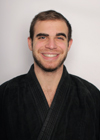 While in college, with no prior martial experience, Mike LoBello began practicing at the Benevolent Heart Dōjō in 2010. Mike is very grateful to have started his training with Joshua and Ignacio. Both teachers have patiently helped guide Mike in his training and in his life. Mike has always been intrigued by martial arts, in particular the level of control and synergy one can develop with the body and mind. Outside of the dōjō, Mike is a freelance videographer.
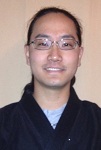 At a young age Y.K.'s father introduced him to basic Kendo. In junior high and high school years he was exposed to Tae Kwon Do, Muay Thai, Karate, Kung Fu, Shaolin Kung Fu, Jeet Kuno Do from friends. His favorite part of high school was spending most of his time after school in the martial arts shelf at Barnes and Noble. Y.K.'s first official class was a self defense class in college. The college course in self defense opened his eyes to explore for an official teacher. The hardest part for Y.K. was pin pointing an art I wanted to dedicate his life to. All that time at Barnes and Noble paid off when he was inspired by Hatsumi Masaaki’s books. At that point he started researching for a dōjō under the License of Hatsumi Soke. Out of all the Dōjōs in NYC Y.K. looked through, Y.K. found the BHD to be the most inspiring. Since 2005 Y.K. has been proud to be studying under Sensei Joshua Noro Polier.
More Member Bios Coming Soon!
 "Classes at the Benevolent Heart Dōjō are fun. There is an element of playfulness because you are training with friends but also a sense of formality that comes with the respect the students show each other. It's a nice balance that creates an environment ideal for learning and improving your skills. The instructors go out of their way to help you understand the reasons behind the techniques as well as help you adapt defensive tactics to your personal strengths. Aside from the physical training you are also exposed to the cultural history and the philosophy behind the success of this centuries old martial art. There's something for everyone here and it is so much fun." - Dae Yoo
 "One satisfying aspect of training with this group is that we all have a lot of respect for each other. No matter what the skill level, we are all treated as equals. Everyone watches out for each other's safety and everyone goes out of their way to ensure that everyone understands each technique on their own terms. Not only have I been learning techniques that could save my or someone else's life, I am learning to expand my awareness of my surroundings, to focus my attention on goals and to trust my reflexes and instincts, both physical and mental. Training is very empowering." - Bo Joseph
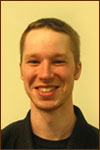 "I firmly believe that training at the Benevolent Heart Dōjō has made me a better and more complete person. The experience has improved many aspects of my life ranging from the spiritual to the intensely pragmatic. I very much enjoy this dōjō's approach of allowing spiritual growth to emerge from diligent martial training, as I have found it to be very effective at cultivating both the mental and physical aspects of the Bujinkan arts. I find that as a result of my training, I am no longer as determined to find concrete, definitive answers, and am able to accept the existence of multiple, contradicting explanations and general mutability of events in the world. I can see that the principles and practices cultivated at the Benevolent Heart Dōjō apply to all aspects of life, and not only do I feel more equipped to protect myself and others in a violent situation, but better able to evade and quell the emergence of violence altogether. The practicality of it all continues to astound and amaze me." - Kenneth Armour
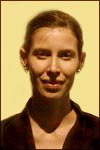 "While training, I am sometimes told to hit with more spirit. This always makes me laugh because I have been training on and off for about a year, and I love it, but I do not have a warrior spirit. I question why I am studying Taijutsu all the time and yet I keep going back to training. Even though I am training with friends, I do try to strike harder and with more precision because I know that at some point, I'll be in a situation where there is no room for error. In class I am challenged to move, think, and focus in a way that I have never had to before. I see how so many ideas are linked and build from sanshin, which I always thought was just a nice warm up. I never thought that it might be safer to get closer to an opponent (as long as your distance and kamae are correct). Rather than hitting, I am amazed at how one, small shift in balance is the difference between staying up while someone twice my size drops to the ground. These moments are the most satisfying. When my friend first introduced me to the Benevolent Heart Dōjō it seemed interesting, and each time I go to class I am still interested in seeing where it will lead." - Carolyn Sevos
 "When asked why I train in martial arts, I usually don't know how I should answer. A perfectly valid answer I think to that query is, "It's fun!". But if I go a bit deeper into that, if I ask myself, "Why is it fun?", things get complicated. I think one reason might be that martial arts is the only thing I have found that combines all aspects of my being - Mind, Body, Spirit whatever and allows me to challenge the cumulative result of these elements while still reminding me of one thing: I am not alone! At one point or another training must involve other people. Yet even though I may be in what looks like some form of duel with this individual, I am still only challenging my own person - trying to get to the next level, whatever that may be. I think our dōjō provides a good environment for all students to challenge themselves and improve without having to worry about winning or being better than the next." - David Levy
"I have been interested in martial arts for much of my life but did not have the opportunity to engage in formal training until I started college. I truly enjoyed that training and continued with it for many years prior to discovering the Benevolent Heart Dōjō. What do I find interesting about martial arts? My interest is multi-faceted: though the physical self-protection aspect is of critical importance, I am also very much interested in the historical, cultural and philosophical components. The Bujinkan tradition speaks to me in all of these areas. In fact, the more I learn about the Bujinkan and these various aspects, the more I want to learn.
My path to the Bujinkan started on a purely physical level: I was searching for a comprehensive system of self-protection. For example, such a system would include (but not be limited to) striking, grappling and weapons training without over-emphasizing any one of these areas. Such a system would be effective against a larger adversary and/or multiple adversaries under less than ideal conditions. It should also teach you how to avoid danger completely when that is the most appropriate action. Whereas my previous training focused almost exclusively on one aspect of hand-to-hand combat, the Bujinkan tradition is comprehensive and, like other classical Japanese martial arts, battle tested. I have come to see that in the Bujinkan there are unifying principles that permeate all of its teachings and this, too, is one of its many strengths.
There are many things that come to mind when I think about my training at the Benevolent Heart dōjō. From a technical perspective it's fascinating. The quality of instruction is excellent. The feeling is NOT like that of a large commercial school - the feeling is that of a smaller group of dedicated practitioners who enjoy training and sincerely work to help each other learn. I look forward to each and every class because I know that we will be doing something different and interesting everyday.
I feel fortunate to have the opportunity to train as a member of this dōjō. My only regret is that I did not find the Benevolent Heart Dōjō earlier in my life." - Cameron McNair
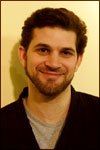 "I originally joined martial arts for self defense and with the single goal of being able to defend myself if someone decided to take a swing at me in the bar. I quickly realized, however, that the principles and awareness that I was gaining permeated many facets of life, and that even though the physical aspect is an end result, I have gained a great deal more. Confidence, respect, and balance both mentally and socially are properties that I have taken from the class in abundance, as well as being able to stop the guy who wanted to pound my face in." - David Kosky
 "I've trained within the Bujinkan since 1993 and I still can't come up with a neat and clean answer as to why I train - and I'm not too fussed about it. Training simply makes me feel good inside and (I'm told at least) more balanced on the outside. Best of all, the Bujinkan gives people the latitude to be themselves both inside and outside training. If you want to wear your budo affiliation in everything you do no problem, if you don't want that, again no problem. So there is no specific bujinkan "type" person like you expect to find at a full-contact karate dōjō or some Olympic-style tae kwon do dojang. Because of that fact, you meet all kinds of people in an environment where most outside status or cultural roles are muted. For example, when I lived in the UK, one of my consistent training partners and I finally got around to discussing what we did for a living - about three years after we first started. More than the feeling or the techniques, it is the people who make things magic. That's why I keep coming back." - Shidôshi John Gauntt

About Dr. Kacem Zoughari, PhD
Dr. Kacem Zoughari is a historian of Japan and a practitioner of classical Japanese martial traditions. Born in Paris in 1972, he works where scholarship and practice meet: the reading of primary sources, densho, and makimono, and the transmission of movement, strategy, and method.
He began martial practice as a youth in Paris in 1986. In 1989 he first trained in Japan under Ishizuka Tetsuji and became a personal student of both Ishizuka Sensei and Hatsumi Masaaki Sōke. He later served as a translator for Hatsumi Sōke, worked with Quest Video, and became a member of the Nihon Budō Gakkai, Japan’s national society for budō research.
Ishizuka Tetsuji (1948–2025) is Kacem’s principal teacher from 1989. Ishizuka Sensei was appointed Sōke of Gyokko Ryū in 2019 and stood among Hatsumi Sōke’s closest and longest-standing students. Kacem has treated that relationship as a lifelong commitment rather than a series of seminars. The volume Gyokko Ryū Legacy and Techniques – Soke Ishizuka Tetsuji, drawn from Ishizuka’s writings and oral transmission, is one of the principal public records of that line of teaching.
Academic Background
Dr. Zoughari’s academic training took place at the Institut National des Langues et Civilisations Orientales (INALCO) in Paris. He earned a master’s degree in Japanese language and civilization with a thesis titled Ninjutsu: Its Form, History, and Essence, and a doctorate in Japanese history and civilization (1997–2008) under François Macé and Jean-Noël Robert. His doctoral thesis, The History of Movement in the Japanese Martial Arts: Structure, Way of Thought, and Transmission, approaches martial technique not as a catalogue of forms but as a historically situated way of thinking, moving, and handing knowledge from teacher to student. He is a native speaker of French, fully professional in English, and bilingual in Japanese.
From 2001 to 2003 he held a Lavoisier research scholarship from the French Ministry of Foreign Affairs, which allowed him to study full time in Japan. That period brought him into contact with a wider circle of classical practitioners and researchers, including:
- Kuroda Tetsuzan
- Kono Yoshinori
- Sakai Eiji
- Hirakami Nobuyuki
- Yagyu Nobuharu
He later received a Toshiba Foundation scholarship and, in 2004, a Medal of Merit from the U.S. Marines. He has lectured at the University of Cambridge, Georgetown University, American University, the University of Vienna, the University of Montreal, the University of Tsukuba, Osaka University, the Nihon Budōkai, the Kōdōkan, and the Société Française des Études Japonaises.
Research
His research focuses on the history and transmission of koryū and bujutsu; the body mechanics and spatial logic of taijutsu and weapons; Edo-period police methods; the reading of densho and makimono; and the ethics and pedagogy of the master–disciple relationship. He has published articles in Japanese, French, English, and Spanish in journals including Hiden Budo Bujutsu, Karate Bushido, and Arts Martiaux Traditionnels d’Asie.
Publications in chronological order
-
 Budōsho, Tome 2 — La transmission chez les Samurai
French ebook announced 11 June 2025. German hardcover listed 5 December 2025. English listing 24 June 2026.
-
 Budo & Koryu 2: Articles, Interviews and Densho
German edition 15 September 2023. English edition 31 March / 1 April 2025. Further articles and interviews, plus densho. The series collects material from 1997 onward.
-
 Gyokko Ryū Legacy and Techniques – Soke Ishizuka Tetsuji
Written by Ishizuka in 2021; translated by Kacem. First printed copies reached readers by 24 April 2024. German edition 5 June 2025.
-
 Budo & Koryu: Articles and Interviews
German edition 1 August 2021. English edition 30 December 2022. Selected articles and interviews from 1997 onward.
-
 Takamatsu Toshitsugu: Ninja Master of the 20th Century
Printed April 2021; copies in hand late May 2021. German edition 24 February 2022. Annotated 1963 Tokyo Sports interviews with Takamatsu. Prefaces by Hatsumi Masaaki and Ishizuka Tetsuji.
-
 The Ninja: Ancient Shadow Warriors of Japan – The Secret History of Ninjutsu
Tuttle hardcover, copyright 2010 (advance notices October–December 2009). Paperback reprint 9 August 2016. Italian edition 1 February 2016. English reworking of the 2003 French book.
-
A Arte do Ninja – Entre Ilusão e Realidade
Portuguese translation. Listings from January 2005; JBC publisher notice 26 July 2006.
-
 Ninpō: Ninjutsu, L’Ombre de la lumière
Guy Trédaniel, 8 December 2003 (some notices say November 2003). His first book.
Doctoral thesis, INALCO, 8 September 2008: The History of Movement in the Japanese Martial Arts: Structure, Way of Thought, and Transmission. Master’s thesis: Ninjutsu: Its Form, History, and Essence.
Current Work
He is founder and director of KAGE Teaching & Consulting in Paris, which works in martial education, translation, cultural consulting, and choreography, and founder of Onmitsu Kage, a platform devoted to the study and recording of classical Japanese martial arts. He also serves as History and Strategy Officer at the Berlin Samurai Museum, advising on the historical evaluation of weapons, armor, and warrior culture. Beyond university lectures and public seminars in Europe, North America, and Asia, he has taught specialized units in military, security, and law-enforcement settings.
What distinguishes Kacem’s public work is a consistent refusal to separate history from movement. He treats principle—kūkan, inasu, tai sabaki, and the inner logic of a lineage—as more durable than any isolated technique, and he treats transmission as a relationship rather than a transaction. After nearly four decades of practice, the through-line of his teaching remains unchanged: read the old documents with care, train the body with equal care, and pass on what was received without embellishment and without distorting the source.
Seminar Video "Trailers" & other Videos of Dr. Kacem Zoughari, PhD
Kacem Zoughari Seminar NYC
Videos
Dae Yoo has been training with Joshua Polier and the Benevolent Heart Dōjō since 1998. She has also attended seminars with other instructors within the Bujinkan. Her primary motives for studying Taijutsu were self defense but she soon developed a great appreciation for the basic principles and the subtle movements behind the art. In addition to her interest in martial arts, Dae is also studying Chinese calligraphy and brush painting. She often incorporates the feeling of the martial arts into her paintings and uses the brush as an abstract expression of physical movement. She has done all of the original artwork you see on this website including the shadowed images that truly make her work unique.
David Levy began training in the martial arts at the age of five, with his first experience in Seido karate. In 1998 he began his training in the Bujinkan with Greg Kyle. This is where David was introduced to Joshua Polier who would become his primary instructor and close friend. David also regularly attends seminars and Tai Kai. Some other instructors he has trained with are David Greenberg, Jack Hoban, and Sean Askew. Outside of the martial arts, David is a computer engineer, and a network security enthusiast.
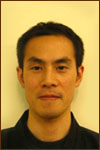 Koji Igarashi began his martial arts training at the age of 12 in Japan.
For many years he enthusiastically trained in Karate and participated in
various Karate competitions. In 2002, Mr Igarashi came to NYC to study Business at
Columbia University. For much of a year he did an extensive search to find
a martial arts school to continue his studies in Budo. In 2003 he found the
school he had been looking for and formally began training in the Bujinkan
with Shidôshi Joshua Noro Polier. Mr Igarashi has been back to Japan several
times for training at the Hombu dōjō and with various respected Japanese
instructors. Outside of training, Mr. Igarashi works for a financial
division of a pharmaceutical company.
Koji Igarashi began his martial arts training at the age of 12 in Japan.
For many years he enthusiastically trained in Karate and participated in
various Karate competitions. In 2002, Mr Igarashi came to NYC to study Business at
Columbia University. For much of a year he did an extensive search to find
a martial arts school to continue his studies in Budo. In 2003 he found the
school he had been looking for and formally began training in the Bujinkan
with Shidôshi Joshua Noro Polier. Mr Igarashi has been back to Japan several
times for training at the Hombu dōjō and with various respected Japanese
instructors. Outside of training, Mr. Igarashi works for a financial
division of a pharmaceutical company.
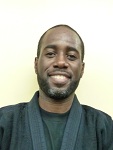 Faruq Lane is a native New Yorker that began his training with the Benevolent Heart Dōjō in 2003. Faruq was introduced to Shidôshi Josh Polier by his friend and assistant instructor Cameron McNair. Every since his youth, Faruq’s has been intrigued with martial arts. It wasn't until he trained in the Bujinkan that he received his first formal instruction. Faruq attests that training in the dōjō has helped him understand the origins of budo; how to persevere when face with life challenges; and strive to maintain a peaceful coexistence with others. Outside of training, Faruq works as a database manager. His favorite activities are listening to jazz music, playing softball, bowling, running and ballroom dancing.
 Lyana began her training with Benevolent Heart Dōjō in late 2011, two months shy of her 38th birthday. Having had virtually no previous exposure to any martial art - not even in films - she was extremely fortunate to have arrived here through a combined desire for a spiritually-fortifying and physically challenging discipline, as well as for knowledge in self-defense. She remains grateful to the friends who recommended her to BHD as well as to the instructors and fellow members whose dedication to the art have kept her there.
Outside of the Dōjō, Lyana serves as a volunteer crisis counselor to survivors of sexual assault and intimate partner violence at two hospitals. She also occasionally performs in community theatre in her neighborhood of Inwood, Manhattan.
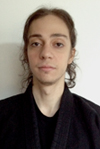 Epy's interest in martial arts started in 1999 when he started practicing Jeet-Kune-Do,
Kali and Pentjak Silat Serak in Italy, where he grew up. He got inspired,
like many other teenagers, by Bruce Lee movies. After some years of traveling and exploring,
he started looking for a martial art that went beyond simply self defense
and explored self and body awareness - how to know and use your body completely.
The search ended in January 2011 when he started practicing with the Benevolent
Heart Dōjō as one of the newest members. Outside the dōjō, Epy works in postproduction:
design and animation for videos and graphics.
He lives with his girlfriend Diana and enjoys exploring the city and traveling.
Epy's interest in martial arts started in 1999 when he started practicing Jeet-Kune-Do,
Kali and Pentjak Silat Serak in Italy, where he grew up. He got inspired,
like many other teenagers, by Bruce Lee movies. After some years of traveling and exploring,
he started looking for a martial art that went beyond simply self defense
and explored self and body awareness - how to know and use your body completely.
The search ended in January 2011 when he started practicing with the Benevolent
Heart Dōjō as one of the newest members. Outside the dōjō, Epy works in postproduction:
design and animation for videos and graphics.
He lives with his girlfriend Diana and enjoys exploring the city and traveling.
 At a young age, Robert studied aspects of Karate, Judo, and Hung Ga Kung Fu. In 2004 he decided to find a "complete" school of martial arts. After extensive research, he believes he was fortunate enough to find what he was looking for:
In 2005, Robert began his practice under Shidôshi Joshua Noro Polier of the Benevolent Heart Dōjō. As a result of his training, Robert's interest in Japanese history, language, and culture flourished. So in 2008, he cultivated an opportunity for himself to journey to Japan, study in academics and train under Hatsumi Soke and Ishizuka Sensei. Upon returning to the USA Robert decided to focus on his law studies. After successfully graduating from law school and passing his New York State Bar exam he returned to his training at the BHD with increased vigor and purpose.